Minggu, 07 Oktober 2012
Minggu, 26 Agustus 2012
Types of Wood & Wood Specifications for Home Interiors
Over the course of the last few years the maximum number of queries I've received from my readers has been around the type of wood to be used and the what wood specification one should look for for different interior applications.
While part of the above query is answered in my earlier article on "What Material to use for Woodwork" I guess looking at the number of questions that have come in on the topic there is need for the article to be much more descriptive especially around the type of wood and their specifications. This post will try to do just that, also please read this in conjunction with the earlier post ("What Material to use for Woodwork")
Note: None of the Images below are my own - these have been downloaded either from Wikipedia or other open sources
1) TYPES OF WOOD FOR COMMON WOODWORK
A] PLYWOOD: Most people recognize this. These are sheets of wood pasted together. However plywood comes in many specifications based on the chemical treatment of the wood and the glue used to bind the sheets together which determines its type of use - see the specifications section below.
Also - Plywood is available in multiple thickness from 2 mm to 38mm
B] BLOCK BOARD: This is cubical stocks of wood sandwitched between two thin sheets of Ply. As is obvious from its construction block board has higher resistance against warping or bending. It is available in the standard thickness of 16, 19 & 25 mm
Again Blockboard comes in different specifications that determine its use in interior applications...more on that later
C] MEDIUM DENSITY FIBRE (MDF): MDF in engineered wood basically made from wood pulp. As is obvious from its construction MDF has low resistance to warping/ bending & moisture. Also nails do not hold well to join MDF sheets together, they need to be either screwed or joined using a minifix (google for it...). Because of this a lot of carpenters are not comfortable working with MDF. The good thing about MDF however is that you get "pre laminated" MDF in different colours, shades & textures and if used intelligently it can help bring down the cost of construction & also enhance the look of woodwork.
D] Particle Board: This is chips of wood glued together and pressed into sheets. Particle board is the cheapest of the above 3 options, it however has least resistance to moisture. Because of its low density & weight Particle board offers good resistance to bending especially in applications requiring long panels (such as a 9 foot high wardrobe doors). Particle board also is available in "pre laminated" form and its correct use can help bring down construction cost.
2) WOOD STANDARDS & SPECIFICATIONS:
Indian standards are not very well documented and there isn't much user understandable documentation available. What I have mentioned below is built on current market terminology & the products available in the market for a layman to make sense of the same. The paragraphs below are not meant to stand up to an ISI inspection but should definitely help "YOU" make informed decisions.
A) "Plywood" Standards & Specs:
1. IS 303 Specification: This is the ISI or BIS Specification for Plywood. This is further divided into (1) MR Grade and (2) BWR Grade
2. IS 710: This is the "Formal" Standard for "Marine Grade" Plywood - used for making boats & ships...hence this is topic for a blog on shipbuilding & not here :)
B] Block Board Standards & Specs
The Bureau of Indian Standards has the IS 1659 Standard for Blockboards. Again this is subdivided into MR Grade (Commercial Board) & BWR/ BWP Grade (Boiling Water Proof)
Explanation on where to use blockboard and where to use Ply is on my other post at What Material to use for Woodwork
Standards for Particle Board & MDF:
In India Particle board & MDF are at a stage of nascence where they are bought based on the Brand Name rather than on the ISI Standard. Some manufacturers do cite exterior Grade & Interior Grade MDF/ Particle Board, however personally I prefer to go with a good brand and the range of colours offered than the "Grade".
That does it for now I guess and as always would welcome any Bouquets & Brickbats
Signing off,
Nandita
While part of the above query is answered in my earlier article on "What Material to use for Woodwork" I guess looking at the number of questions that have come in on the topic there is need for the article to be much more descriptive especially around the type of wood and their specifications. This post will try to do just that, also please read this in conjunction with the earlier post ("What Material to use for Woodwork")
Note: None of the Images below are my own - these have been downloaded either from Wikipedia or other open sources
1) TYPES OF WOOD FOR COMMON WOODWORK
![]() |
| PLYWOOD |
Also - Plywood is available in multiple thickness from 2 mm to 38mm
![]() |
| BLOCK BOARD |
Again Blockboard comes in different specifications that determine its use in interior applications...more on that later
![]() |
| MDF |
D] Particle Board: This is chips of wood glued together and pressed into sheets. Particle board is the cheapest of the above 3 options, it however has least resistance to moisture. Because of its low density & weight Particle board offers good resistance to bending especially in applications requiring long panels (such as a 9 foot high wardrobe doors). Particle board also is available in "pre laminated" form and its correct use can help bring down construction cost.
2) WOOD STANDARDS & SPECIFICATIONS:
Indian standards are not very well documented and there isn't much user understandable documentation available. What I have mentioned below is built on current market terminology & the products available in the market for a layman to make sense of the same. The paragraphs below are not meant to stand up to an ISI inspection but should definitely help "YOU" make informed decisions.
A) "Plywood" Standards & Specs:
1. IS 303 Specification: This is the ISI or BIS Specification for Plywood. This is further divided into (1) MR Grade and (2) BWR Grade
- MR Grade: Stands for Moisture Resistance - MR Grade Ply is basically regular plywood. This is also sometimes called Commercial Ply. In laymans terms this can be used everywhere except in the Bathroom & Kitchen.
- BWR Grade Plywood: This is Boiling Water Resistant Plywood. Some companies call it BWP (Boiling Water Proof) Grade however the Bureau of Indian Standards has officially done away with the BWP terminology. In layman's terms this wood is also mentioned as Marine Ply & is for use in the Kitchen & Bathroom.
B] Block Board Standards & Specs
The Bureau of Indian Standards has the IS 1659 Standard for Blockboards. Again this is subdivided into MR Grade (Commercial Board) & BWR/ BWP Grade (Boiling Water Proof)
Explanation on where to use blockboard and where to use Ply is on my other post at What Material to use for Woodwork
Standards for Particle Board & MDF:
In India Particle board & MDF are at a stage of nascence where they are bought based on the Brand Name rather than on the ISI Standard. Some manufacturers do cite exterior Grade & Interior Grade MDF/ Particle Board, however personally I prefer to go with a good brand and the range of colours offered than the "Grade".
That does it for now I guess and as always would welcome any Bouquets & Brickbats
Signing off,
Nandita
Minggu, 20 Mei 2012
The "What Material to use for the Kitchen Counter Top" Conundrum. How to decide between Granite, Marble, Corian, Quartz, Acrylic etc.
A number of folks have been inquiring on what material works best for the kitchen slab. This decision has lately become more complicated due to the different variety available in the market and whether the newer materials available suit our desi style of cooking & handling.
To answer this question lets look at each of the materials available and the pros & Cons of each
1. Good Old Granite:
--------------------------------------------------------------
By far the most popular choice, and not without reason. Granite is more or less scratch & stain proof. The only draw back with Granite is the limitation on the colours & shades available. If you are ok with the Henry Ford philosophy of "You can choose any colour as long as its black" then this is the best material for you. One would argue that granite does come in other colours, however my personal view is that the other colours in granite do not give as good a finish & look compared to black granite or the other materials (below). Approx price range 100 - 700 per square foot (some imported one do cost the sky)
2. Corian:
--------------------------------------------------------------
The most hotly debated material. By the way - did you know that while Corian is generally used as a family name for all types of acrylic solid surfaces for countertops it is actually brand name owned by Du Pont (Much like how we assume the name "Surf " to mean any kind of washing powder). Acrylic countertops in Bangalore are available from Dupont (Corian), Merino (Hanex) & LG (Himacs). The great thing about Acrylic solid surface is that it can be shaped as per one's requirement, hence giving a lot of flexibility to the designer. Also the finishes & edges are clean & slick. The only thing that goes against Acrylic surfaces is that they are prone to scratches & stains....these can however be removed by "rebuffing" the surface. Contrary to usual belief, Acrylic Surfaces are extremely resistant to heat (do not melt). To prove this to myself I actually brought a small piece of the material home and experimented with all kinds of things. The poor piece of Acrylic (this one is Hanex) you see in the picture below has hosted
1. A hot pressure cooker right out of the flame
2. A kadhai fuming with hot oil and
3. Knife cuts from daily vegetable chopping
Well, except for the scratches, it did hold up to tell its story.
The other good thing about Acrylic is that it comes in a range of colours including Shocking white (my favourite). On the price front Acrylic will set you off by over Rupees 800 per square foot, so u need to have a strong heart and a loving husband to go with it.
Marble:
----------------------------------------------------------------
Apart from the Rajasthani White (Makarana) Marble you have Italian marble widely available in Bangalore. It comes in a variety of very rich colours. The challenge in using Marble is that (1) You need to buy the whole sheet - so if you don't do your maths right then you may end up wasting quite a bit (2) Marble is brittle - you need a very good workman to cut & lay the sheet and (3) Not all types of Marble are stain & scratch resistance, hence you need to choose carefully. However if "Managed" well Marble can give a very distinct look. For the record...I myself have used Marble in my kitchen (see the pic) and contrary to the popular belief that Marble is not suited for Kitchen Counter tops I kind of am satisfied with it. What you need to know however is that it does require a bit of maintenance and kindly use - not as much as a " Fill it, shut it, forget it" (remember the old Hero Honda ad) type like granite. Price Point - Rupees 350 psft and above.
Quartz - Artificial Stone:
-------------------------------------------------------------------
This is a fairly new addition to the family of materials for counter tops. I was frankly a little skeptical before using this when one of my customers insisted but its been around one year (see the pic) and so far the customer is not complaining. I really would not mind using this again. Quartz stands good in all aspects such as scratch & stain resistance, easy workmanship, slick finishes & availability in a range of colours. Price Point - Rs 500 psft and above
There are other options available like Laminate on wood etc however I do not feel that these stand up the exacting standards for Indian cooking and these are definitely NOT Indian MAID Proof :)
That's it for now I guess, that one was quite a marathon ...have not typed sooo much in a long time and to those of you who have had the patience of reading till this very line...a big thank you & hope this helps you in your own Marathon of home making. As always would welcome any bouquets & brickbats
Signing off
Nandita Manwani
To answer this question lets look at each of the materials available and the pros & Cons of each
1. Good Old Granite:
--------------------------------------------------------------
By far the most popular choice, and not without reason. Granite is more or less scratch & stain proof. The only draw back with Granite is the limitation on the colours & shades available. If you are ok with the Henry Ford philosophy of "You can choose any colour as long as its black" then this is the best material for you. One would argue that granite does come in other colours, however my personal view is that the other colours in granite do not give as good a finish & look compared to black granite or the other materials (below). Approx price range 100 - 700 per square foot (some imported one do cost the sky)
2. Corian:
--------------------------------------------------------------
The most hotly debated material. By the way - did you know that while Corian is generally used as a family name for all types of acrylic solid surfaces for countertops it is actually brand name owned by Du Pont (Much like how we assume the name "Surf " to mean any kind of washing powder). Acrylic countertops in Bangalore are available from Dupont (Corian), Merino (Hanex) & LG (Himacs). The great thing about Acrylic solid surface is that it can be shaped as per one's requirement, hence giving a lot of flexibility to the designer. Also the finishes & edges are clean & slick. The only thing that goes against Acrylic surfaces is that they are prone to scratches & stains....these can however be removed by "rebuffing" the surface. Contrary to usual belief, Acrylic Surfaces are extremely resistant to heat (do not melt). To prove this to myself I actually brought a small piece of the material home and experimented with all kinds of things. The poor piece of Acrylic (this one is Hanex) you see in the picture below has hosted
| Acrylic Counter top Material/ Corian - Under Test |
2. A kadhai fuming with hot oil and
3. Knife cuts from daily vegetable chopping
Well, except for the scratches, it did hold up to tell its story.
The other good thing about Acrylic is that it comes in a range of colours including Shocking white (my favourite). On the price front Acrylic will set you off by over Rupees 800 per square foot, so u need to have a strong heart and a loving husband to go with it.
Marble:
----------------------------------------------------------------
| Italian Marble Counter top |
Quartz - Artificial Stone:
-------------------------------------------------------------------
| Quartz Kitchen Counter Top |
There are other options available like Laminate on wood etc however I do not feel that these stand up the exacting standards for Indian cooking and these are definitely NOT Indian MAID Proof :)
That's it for now I guess, that one was quite a marathon ...have not typed sooo much in a long time and to those of you who have had the patience of reading till this very line...a big thank you & hope this helps you in your own Marathon of home making. As always would welcome any bouquets & brickbats
Signing off
Nandita Manwani
Senin, 12 Maret 2012
Feedback from IndiaWood 2012 Exhibition Bangalore
Folks ....some quick notes from the IndiaWood Exhibition (http://indiawood.com/) that concluded in Bangalore last month. Some interesting findings that you may find useful in your home decoration journey
1. Steel Panels: Saw some polished steel (etched & mirror finishes) introduced & showcased for interior design needs. Interestingly the vendor (www.Mapple.co.in), who supplies stuff from Haryana is willing to cater to the Home Decor Market (versus the commercial market done by such vendors usually). These sheets have the potential to give pretty exquisite finishes
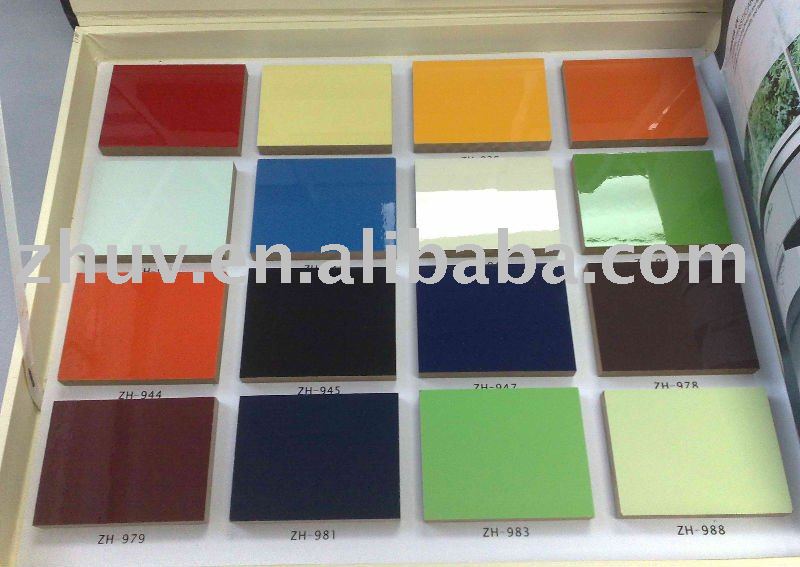
2. Prices of UV coated MDF boards down: These are boards that have a hi gloss/ anti scratch finish (http://i01.i.aliimg.com/photo/v0/343750171/high_gloss_uv_coating_mdf_board.jpg). Some vendors have been passing these off as Acrylyc boards and charging extreme prices. While these were available earlier through grey market imports, now there are reputed Indian companies offering these at a fraction of the cost
3. Ebco - As a strong contender in hardware: Ebco (www.ebco.in) showcased a pretty impressive range in hardware and seems to be heading to become a strong contender to Hettich in the hi end hardware space...time will tell. I am yet to check out their prices but hopefully these will be competitive.
4. Pre Veneered MDF Boards from Green Ply: Green Ply has introduced pre veneered MDF boards. From a cost perspective these offer a fair amount of savings than using Ply + Veneer combination. Since these boards only come in MDF (Pre Veneered ply is not available) there is some amount of attention that will be required while designing the furniture, however there is no doubt that these boards will bring down the total cost of construction + save on the overall time to deliver.
5. Hardwood kitchen Shutters prices have come down: Hardwood shutters have always ranged above some INR 500 psft. Some local Bangalore vendors have now brought these prices down. Creating traditional designs & Kitchens in Hardwood should not be as expensive as it used to be.
6. MDF 3 D boards & panels available commonly: Designer MDF boards and 3D boards (usually used for pannelling etc.) that were earlier available only at specific designer outlets are now freely distributed and are therefore being made available through the local plywood store
7. Flush Doors - Prices down: The prices of Flush doors have also come down substantially and the range starts from approx INR 100 psft. Hence if you are planning to redo your doors by laminating/ veeneering them it might be cheaper to replace them & use them for your other woodwork
Thats it from me....I hope you found the above useful.....as always will welcome your comments, bouquets & brickbats
Signing off
Nandita
1. Steel Panels: Saw some polished steel (etched & mirror finishes) introduced & showcased for interior design needs. Interestingly the vendor (www.Mapple.co.in), who supplies stuff from Haryana is willing to cater to the Home Decor Market (versus the commercial market done by such vendors usually). These sheets have the potential to give pretty exquisite finishes
2. Prices of UV coated MDF boards down: These are boards that have a hi gloss/ anti scratch finish (http://i01.i.aliimg.com/photo/v0/343750171/high_gloss_uv_coating_mdf_board.jpg). Some vendors have been passing these off as Acrylyc boards and charging extreme prices. While these were available earlier through grey market imports, now there are reputed Indian companies offering these at a fraction of the cost
3. Ebco - As a strong contender in hardware: Ebco (www.ebco.in) showcased a pretty impressive range in hardware and seems to be heading to become a strong contender to Hettich in the hi end hardware space...time will tell. I am yet to check out their prices but hopefully these will be competitive.
4. Pre Veneered MDF Boards from Green Ply: Green Ply has introduced pre veneered MDF boards. From a cost perspective these offer a fair amount of savings than using Ply + Veneer combination. Since these boards only come in MDF (Pre Veneered ply is not available) there is some amount of attention that will be required while designing the furniture, however there is no doubt that these boards will bring down the total cost of construction + save on the overall time to deliver.
5. Hardwood kitchen Shutters prices have come down: Hardwood shutters have always ranged above some INR 500 psft. Some local Bangalore vendors have now brought these prices down. Creating traditional designs & Kitchens in Hardwood should not be as expensive as it used to be.
6. MDF 3 D boards & panels available commonly: Designer MDF boards and 3D boards (usually used for pannelling etc.) that were earlier available only at specific designer outlets are now freely distributed and are therefore being made available through the local plywood store
7. Flush Doors - Prices down: The prices of Flush doors have also come down substantially and the range starts from approx INR 100 psft. Hence if you are planning to redo your doors by laminating/ veeneering them it might be cheaper to replace them & use them for your other woodwork
Thats it from me....I hope you found the above useful.....as always will welcome your comments, bouquets & brickbats
Signing off
Nandita
Sabtu, 15 Oktober 2011
Home Interiors - Some photographs of my latest project @ Elita Promennade
Hi,
Before I get into the visuals...I have been getting questions on design best practices, materials to be used for interiors etc. from a number of you. This blog already has posts written earlier that answer some of these questions. As a refresher the links are given below. One more thing ... the blog archive (Look in the left pane of this page) has more than just what is mentioned below...feel free to browse through the same as well.
1. Choosing the right material for Woodwork - http://www.homedesignbangalore.com/2010/09/so-what-is-right-material-to-choose-for.html
2. Thumb-rules for Costing & Budgeting for Interiors - http://www.homedesignbangalore.com/2010/08/costing-your-woodwork-do-it-yourself.html
3. Design best practices for making Sliding Wardrobes - http://www.homedesignbangalore.com/2010/07/sliding-wardrobes-do-it-right-first.html
4. Design best practices for building a modular kitchen - http://www.homedesignbangalore.com/2010/06/so-what-is-modular-kitchen-and-some.html
....and finally - here are the photographs...would welcome any bouquets & brickbats :)
Thanks
NM
Before I get into the visuals...I have been getting questions on design best practices, materials to be used for interiors etc. from a number of you. This blog already has posts written earlier that answer some of these questions. As a refresher the links are given below. One more thing ... the blog archive (Look in the left pane of this page) has more than just what is mentioned below...feel free to browse through the same as well.
1. Choosing the right material for Woodwork - http://www.homedesignbangalore.com/2010/09/so-what-is-right-material-to-choose-for.html
2. Thumb-rules for Costing & Budgeting for Interiors - http://www.homedesignbangalore.com/2010/08/costing-your-woodwork-do-it-yourself.html
3. Design best practices for making Sliding Wardrobes - http://www.homedesignbangalore.com/2010/07/sliding-wardrobes-do-it-right-first.html
4. Design best practices for building a modular kitchen - http://www.homedesignbangalore.com/2010/06/so-what-is-modular-kitchen-and-some.html
....and finally - here are the photographs...would welcome any bouquets & brickbats :)
Thanks
NM
| Elita Promenade - Book Rack & Show Case. The pebbles in the bottom part of the unit are still to be put in |
| Elita Promenade - Entry Wall I hand painted a part of this personally :) |
| Elita Promenade - Another view of the bookshelf. Now you can see where the pebbles will go in |
| Elita Promenade - Sliding Wardrobe Laminate & Glass Shutters & Metallic Edge Handles |
| Elita Promenade - Kids Study Area |
| Elita Promenade - Wall paper in Kids Room. Bed Headboard in Leather |
| Elita Promenade - Dressing Table |
| Elita Promenade - Master Bedroom Sliding Wardrobe Laminate & Metallic Edge Handles |
| Elita Promenade - Guest BR Wardrobe In Veneer & Melamine Matt |
| Elita Promenade - Bathroom Storage |
| Elita Promenade - Dining Table, Bar Unit & Wall Pannel (in Duco) |
| Elita Promenade - Kitchen Counter top is Quartz |
| Elita Promenade - Breakfast Counter Cum Storage. Acrylic (Hanex) Counter Top |
| Elita Promenade - Kitchen - Another Angle |
| Elita Promenade - One More Kitchen the LED lights are visible in this photograph |
| Elita Promenade - Storage under the Breakfast Counter |
| Elita Promenade - Full Modular Kitchen |
| Elita Promenade - Dining Table, Bar Unit, Wall Paneling, Book Rack |
| Elita Promenade - Unit hosting the 4.5 feet Krishna Statue. The whole living room was designed around this unit |
| Elita Promenade - Another image of the Krishna unit (in Duco) - with the lights off |
Sabtu, 06 Agustus 2011
Home Design Vaastu Shastra - Episode 2 - Best practices in Kitchen design
Well....am back after a looooong break. Have been neck deep in work as well as daily household stuff these past few months.
One of the most tricky spaces at home in terms of design is the kitchen as it needs to be ergonomic, utilitarian, maximizing storage space as well as good looking all at the same time. The fact that the kitchen has "hot spaces", "wet spaces", "work spaces", "wash spaces"...(I guess you get the idea) complicates the design even further.
I am giving below some practical best practices in kitchen design that I have learnt in the course of the last few years I have been in the field, I hope you find these useful
1. Use the right wood & material for the kitchen. For more details refer my earlier post at http://www.homedesignbangalore.com/2010/09/so-what-is-right-material-to-choose-for.html
2. Ask your builder to give you a raw kitchen - with no tiling or the slab fitted - In most cases the slab & tiles need to be changed or re-laid which ends up adding to the overall cost. Ask the builder to just hand over the tiles & the slab to you.
3. If possible ask your builder to provide tap points in the wall " Below" the slab height. This way you will be able to pull the pipe from behind the bottom cabinets and do the sink placement according to your need & design rather than be restricted by where the builder has provided the points.
4. Place the gas cylinders in the utility and have a piped connection to the hob. This is not only safer but also gives you vital storage space inside the kitchen since the cylinders move out.
5. Always provide a loft in the kitchen....this not only provides storage space but also hides the chimney exhaust pipe.
6. When deciding on the placement of the refrigerator keep in mind whether your refrigerator is right or left handed as this affects the "ease of access" while reaching inside the fridge.
7. The above applies to placement of the Microwave as well.
8. Drawers are ideal for storing stuff for daily use as stuff in drawers is easily accessible while cabinets (palla) are ideal for storing items that are sparingly used.
9. Use corners wisely. Corners provide fairly large spaces and can be well utilized for items of long term storage like grains, spare crockery, plastics etc.
10. If you prepare non veg at home then suction capacity of the chimney should be minimum 1000 cum/hr
11. Put the water purifier alongside the "second" sink in the utility. This reduces the "wetness" of the kitchen as it moves the "extreme wet work" to the utility.
12. Preferably leave work space on either side of the hob. Avoid putting the hob next to a corner or alongside the edge of the slab.
13. Keep spaces for refrigerator/ microwave/ dishwasher etc based on exact measurements. With space too small - things will not fit & spaces too large don't look good.
14. Never use Stainless Steel wire type cutlery unit. The cutlery keeps "peeping" out of these, obstructing the movement of the drawer
15. Plan for a hidden electric point to power the chimney as well as the hob (you may or may not know this but ignition systems of most hobs available in India are electrically powered - not battery powered)
Thats all that I can think of at the moment...will welcome any bouquets or brickbats.
Happy Home making
Signing off
Nandita
One of the most tricky spaces at home in terms of design is the kitchen as it needs to be ergonomic, utilitarian, maximizing storage space as well as good looking all at the same time. The fact that the kitchen has "hot spaces", "wet spaces", "work spaces", "wash spaces"...(I guess you get the idea) complicates the design even further.
I am giving below some practical best practices in kitchen design that I have learnt in the course of the last few years I have been in the field, I hope you find these useful
1. Use the right wood & material for the kitchen. For more details refer my earlier post at http://www.homedesignbangalore.com/2010/09/so-what-is-right-material-to-choose-for.html
2. Ask your builder to give you a raw kitchen - with no tiling or the slab fitted - In most cases the slab & tiles need to be changed or re-laid which ends up adding to the overall cost. Ask the builder to just hand over the tiles & the slab to you.
3. If possible ask your builder to provide tap points in the wall " Below" the slab height. This way you will be able to pull the pipe from behind the bottom cabinets and do the sink placement according to your need & design rather than be restricted by where the builder has provided the points.
4. Place the gas cylinders in the utility and have a piped connection to the hob. This is not only safer but also gives you vital storage space inside the kitchen since the cylinders move out.
5. Always provide a loft in the kitchen....this not only provides storage space but also hides the chimney exhaust pipe.
6. When deciding on the placement of the refrigerator keep in mind whether your refrigerator is right or left handed as this affects the "ease of access" while reaching inside the fridge.
7. The above applies to placement of the Microwave as well.
8. Drawers are ideal for storing stuff for daily use as stuff in drawers is easily accessible while cabinets (palla) are ideal for storing items that are sparingly used.
9. Use corners wisely. Corners provide fairly large spaces and can be well utilized for items of long term storage like grains, spare crockery, plastics etc.
10. If you prepare non veg at home then suction capacity of the chimney should be minimum 1000 cum/hr
11. Put the water purifier alongside the "second" sink in the utility. This reduces the "wetness" of the kitchen as it moves the "extreme wet work" to the utility.
12. Preferably leave work space on either side of the hob. Avoid putting the hob next to a corner or alongside the edge of the slab.
13. Keep spaces for refrigerator/ microwave/ dishwasher etc based on exact measurements. With space too small - things will not fit & spaces too large don't look good.
14. Never use Stainless Steel wire type cutlery unit. The cutlery keeps "peeping" out of these, obstructing the movement of the drawer
15. Plan for a hidden electric point to power the chimney as well as the hob (you may or may not know this but ignition systems of most hobs available in India are electrically powered - not battery powered)
Thats all that I can think of at the moment...will welcome any bouquets or brickbats.
Happy Home making
Signing off
Nandita
Selasa, 15 Februari 2011
More Photographs - Latest project at Elita - JP Nagar
| Elita Promenade - Guest BR |
| Elita Promenade - TV Unit ...awaiting the TV :) |
| Elita Promenade - Study Unit |
| Elita Promenade - MBR - Sliding Wardrobe (Read the earlier post on how to make one) |
| Elita Promenade - Self Explanatory |
| Elita Promenade - Kitchen 1/3 |
| Elita Promenade - Kitchen 2/3 - Magic Corner |
| Elita Promenade - Kitchen 3/3 - Full Tall unit on the left, space in the Right side unit is for the dishwasher |
Langganan:
Postingan (Atom)